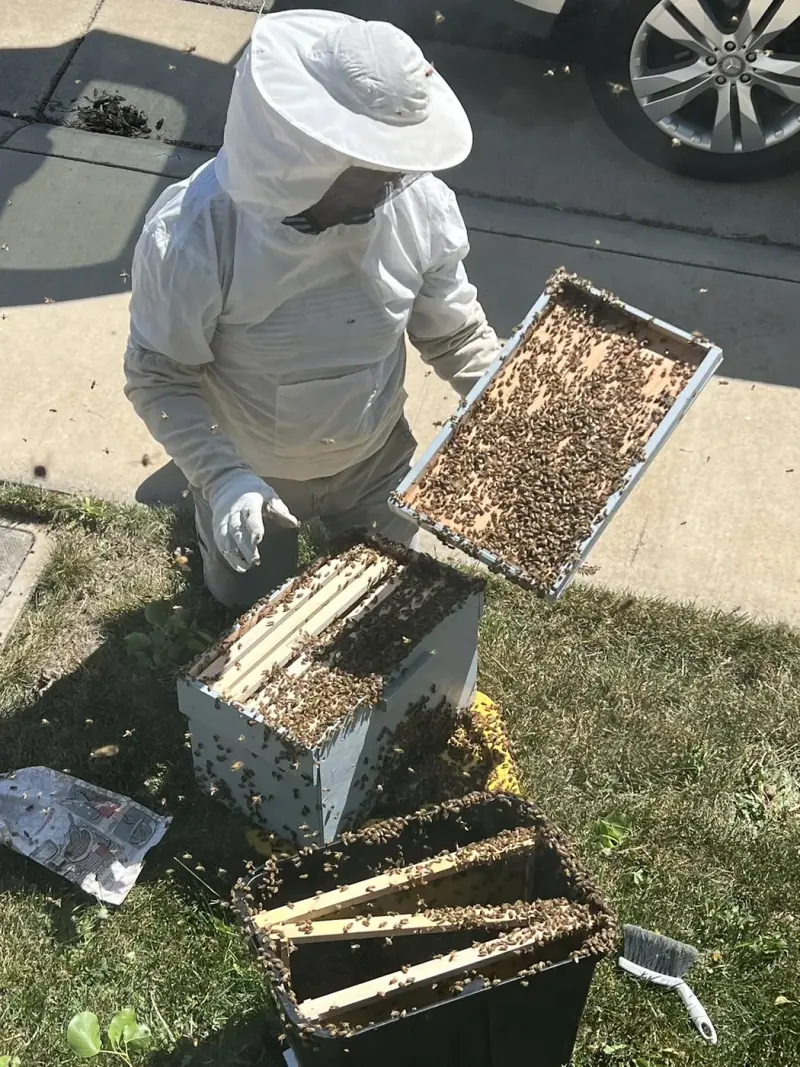
Free Bee Removal in Greater Sacramento
The Bee Conservatory provides free, humane bee swarm removal and relocation across the Greater Sacramento region. Find your city below or report a swarm directly.
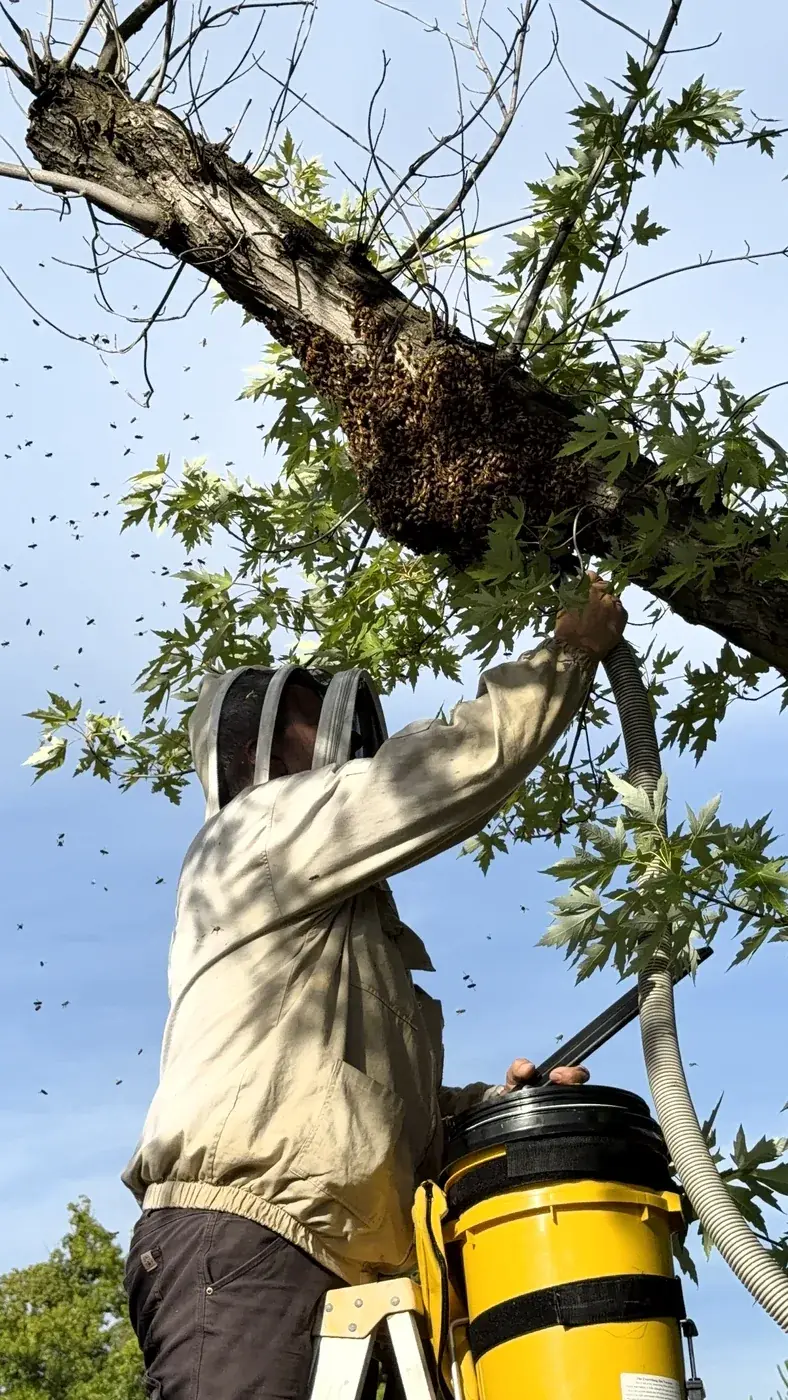
How our free bee removal works
The Bee Conservatory removes live bees and relocates them instead of killing them. We serve Sacramento and 30 nearby cities in the Greater Sacramento region. Live bee removal is free. If a colony is inside a wall or other structure, we'll explain what's involved, including any repair or other costs, before any work starts.
Call us and we'll tell you when we can get there. When you report bees, tell us where they are and how long they have been there, and a photo helps.
| What you found | What it usually is | What happens next |
|---|---|---|
| A swarm on a branch, fence, or eave | A temporary cluster of bees looking for a new home. Usually calm. | Live removal is free. Report it early, before the bees settle in. |
| Bees in a wall, roof, or soffit | An established colony that needs careful extraction. | Live removal is free. We'll explain what's involved, including any repair or other costs, before any work starts. |
| Bees in the ground | Often bumblebees or ground-nesting mining bees. | We assess the species and advise on the best approach. |
| Yellow jackets, paper wasps, or hornets | Wasps, not bees. | We don't remove them. Our guide below shows how to tell the difference. |
Sacramento Metro
Placer County
Central Suburbs
East Sacramento & Foothills
Yolo & Solano County
Nevada County
Found a swarm right now?
Don't wait — report it and we'll respond as quickly as possible.
Why We Offer Free Bee Removal
The Bee Conservatory is a nonprofit. We believe live bees are worth moving instead of killing, and donations help cover the cost. Live bee removal is free. If a colony is inside a wall or other structure, we'll explain what's involved, including any repair or other costs, before any work starts. Call us and we'll tell you when we can get there.
U.S. beekeepers lost 55.6% of their managed colonies between April 2024 and April 2025, a record (Auburn University / Apiary Inspectors of America).